A Guide To Building Your Solar-Powered Home

Modern technology makes it cost-effective and sensible to build a 100% solar-powered home, with no utility bills and minimal carbon footprint.
At Gecko Solar Energy, we’ve helped thousands of homeowners achieve their dream of living in a solar-powered home, whether we work directly with you or with your builder or architect.
This guide is designed for those in the process of building a new home, although many of the concepts apply to existing homes as well.
The possibility of building a new house is that you can do it from scratch. While in an existing home you have to do as much as possible with the decisions made by the previous owners, in a new home, you can make design decisions that will save you money while allowing your home to be cleaner and more ecological.
1 – Solar Makes Sense in México
The Mexican Republic is considered one of the countries with the greatest future in the field of photovoltaic solar energy according to the European Association of PV solar energy, due to its high solar irradiation (5.2 kWh / m2). Mexico receives high levels of solar irradiation in the vast majority of its territory.
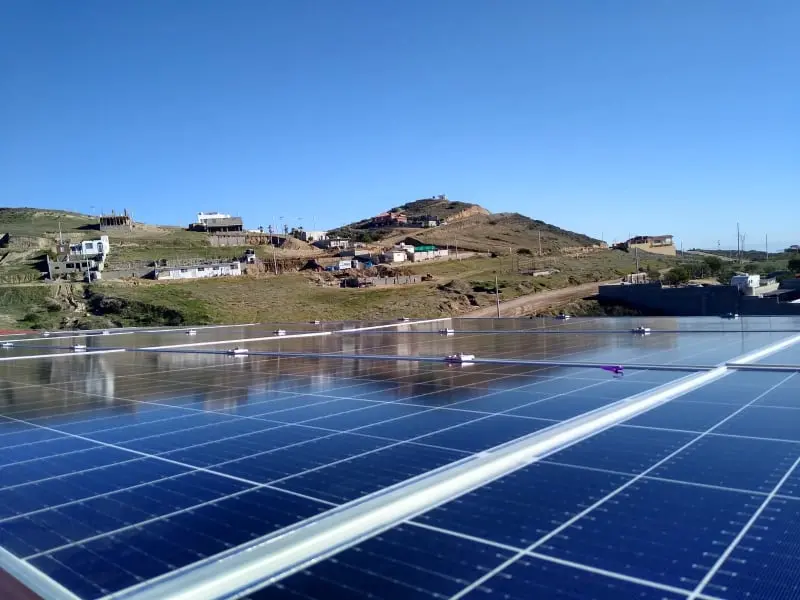
- Solar panels have declined in price by 75% since 2004. This decreased cost means that the overall cost of electricity from solar is far cheaper than from the grid over the course of your home’s life.

- Solar electricity can be used to heat and cool your home. While it’s great to save money on your electric bill, solar really becomes a valuable investment when used to power heating and cooling equipment, such as modern cold climate heat pumps and heat pump water heaters. By building a tight, well-insulated home, you reduce the need to build an expensive monstrosity of a heating system, freeing up funds to pay for the heat pump and solar combo (more on that shortly).
- Solar panels are incredibly reliable. Solar panels come warrantied for 25 years and are expected to have a service life of 40+ years. Solar panels from the 1970s have tested as still producing most of their original power output, and today’s panels are engineered to a far higher standard. With no moving parts, a solar panel system is one of the most reliable, long-lived mechanical systems you can invest in.
2 – Build it Better

The most important advice we have doesn’t even pertain to solar…it’s about the house itself. Build it better!
While building codes have gotten tougher around energy efficiency, we still think that a code-built home is far below the minimum insulation/air-tightness that any reasonable person would want. It really doesn’t cost that much more money to build a tighter, better-insulated home, and the effort to do so will result in huge savings down the road, in terms of energy bills you don’t need to pay and carbon pollution you’ll keep out of the atmosphere.
3 – Build it in the Right Direction
The roof matters!! Some decisions around how you design and orient your home can have big impacts on solar.
- Everyone knows that the sun rises in the east and sets in the west… But did you know it tracks along the southern skyline as it does so? This is why solar panels (in the Northern Hemisphere) get oriented to the south. The sun is relatively higher in the skyline during the summer, and relatively lower in the wintertime.

- “True” south in New England is 195 degrees on the compass (slightly west of magnetic south).
- A perfect solar array will be on a pitched roof (6/12 to 12/12) facing +/- 15 degrees of true south.That said, solar panels will produce up to 90% of their rated output even at more east and west orientations, so if your future home’s site makes a southerly orientation impossible, it doesn’t mean solar won’t be a great investment.

- NO SHADE – Shade trees (or other obstructions) have a serious negative effect on solar production.
- Simple roof layouts (minimum dormers, plumbing vents, chimneys, etc) are much better for solar. Put plumbing vents and chimneys on the north side of the roof, if possible.
If you absolutely can’t design your roof in such a way that it is compatible with solar, you can install solar elsewhere! We have ground-mounted solar, dual-axis solar trackers, and solar canopy options available.
4 – Powering Your Home With Solar
There are three main ways to go solar:

- Off-grid: A true “off grid” dwelling is not physically connected to the electric utility, and generally uses batteries to provide baseload power, recharged by solar panels and/or a fossil fuel generator. Being off-grid means you have significant limitations to how many power loads you can use (as battery technology is still relatively expensive and there are hard limits to how much power you can produce in winter!) and only makes sense in situations that are extremely difficult to connect to the utility grid, i.e. you build a home up on a mountain or on an island.

- Grid-tied: 99% of solar installations in the United States are grid-tied, meaning they still have a physical connection to the public utility grid, but can also produce their own solar power. Under this arrangement, you treat the utility like a gigantic battery – anytime the sun is out, your home produces and consumes its own solar electricity, but any excess you can send out to the grid. At night or during crummy weather, you use power from the electric grid like normal. Utilities are required by law to give you credits for any solar power you send out to the grid, under an arrangement called ‘net metering.’ It varies, but in most places, you get a 1:1 credit, or 1 unit of exported solar = 1 unit of utility credit you can use later.

- Grid-tied with battery backup: The best of both worlds, is have a grid-tied solar array (which allows your solar to produce as much power as it possibly can with no limits to battery size) with battery backup (so that if the grid goes down you have a source of backup power). Modern battery backup solutions include Tesla Powerwall, sonnen, and Maine-made Pika Energy systems.
Sizing Up
For this guide, we’re going to assume you’re going with one of the grid-tied solar options.
In a grid-tied solar electric system, with or without battery backup, the goal is generally to achieve net-zero, meaning, at the end of the year your home will have produced as much electricity as it has consumed. This is not always possible (especially if you’re heating with solar and also running an electric car) but it’s a worthy goal!
“Plug Load” Electricity Estimate
Before we get into heating and cooling, we start with getting an estimate for ‘plug loads’ — the amount of power you need for your household appliances, electronics, well pump, etc.
This is tricky! No two families are alike, and two families living in the same home can have VERY different electricity bills depending on occupant behavior. Once you start to work with a ReVision Solar Design Specialist, we’ll do a more thorough analysis, and ideally get a professional energy designer in the mix to build a more complex model.
Skip to The 100% Solar-Powered Home (plus calculator) to get your own rough-order-of-magnitude solar estimate built!
kilowatt-hours explainedSome terminology…
What’s in a Watt?
- Electricity is measured in units called kilowatts (1,000 watts). This represents instantaneous power – much like miles per hour measure the speed of a vehicle, but not its travel over time.
- Electricity is billed in units called kilowatt-hours. This is the amount of total energy as an expression of kilowatts and time. This is like measuring how many miles a car traveled, and averaging the miles-per-hour over that time period.
- Solar panel arrays are usually sold in kilowatts (the ‘nameplate’ rating of the panels in full sun) but its far more important to understand how much energy they will produce over time – or their kilowatt-hour (kWh) potential.
Each 1kw of solar panels (roughly 3) = 1,200 kWh a year of solar production on a decent solar site in our region.
5 – Heating Your Home with Solar

Do you have a roaring, monstrous sounding boiler firing your home today? Dread the idea of putting such a monster into your new home — as well as a tank full of toxic, climate-damaging fuel? Well, good news! Your solar-powered home of the future needs no oil or gas at all!
This is all possible thanks to modern heat pumps. Modern cold-climate heat pumps work by using a refrigeration process similar to the way your home’s refrigerator works. Warmth is extracted from the ambient outside air (down to temperatures around -15F) and transferred into your home. Since the heat pump is moving, not creating, heat, it is highly efficient. Powered by solar, a heat pump can heat your home for the equivalent of around $1/gallon for oil!
While it’s possible to keep drafty old homes warm with heat pumps, they are far more effective when used in a tight, well-insulated house, hence our recommendation that you build one!
If you build a good quality house, then you can heat primarily with heat pumps, and install a small backup system (say a wood or pellet stove or electric baseboard) to supplement the heat pumps during periods of extreme cold weather.
Since heat pumps are powered by electricity, you can use solar power you bank in the summertime as your fuel source in the winter!
Sizing it Up
We love designing a whole-house heat pump system! Here are some of the considerations that go into it:
- What is the approximate square footage (and volume) of the space? How many rooms? What is the layout?
- What is the approximate insulation level of the home? Is it insulated above code?
- Is there full basement, crawl-space or slab on grade?
Once we have some of these specs, we can start running through formulas calculating stuff like:
- Expected heat needs on an hourly basis in the worst of winter.
- Expected heat needs over the entire winter season.
- Heat output per indoor heat pump unit.
And use those combinations of factors to design a viable system!
The next step, once you have a plan for an all-electric heating system, is to figure out how many solar panels you’ll need to power it.
Skip to our 100% Solar-Powered Home (plus calculator) to weigh in!
kWhs and BTUs
Kilowatt-hours (kWhs) and British Thermal Units (BTUs) are both units of energy, with the former tending to be used for electricity and the latter for heating. 1kWh = 3,412 BTUs.
Since we can easily convert between units, we can develop an estimate for how much electrical energy will be required to produce enough heat energy to keep a space comfortable.
- Firstly, heat pumps generate 2.5 units of BTU for every 1kWh they consume (a concept called “Coefficient of Performance,” or COP).
- That means, 1kWh of electricity = 8,530 BTUs of heat energy.
- Each 1 kilowatt of solar panels = ~1,200 kWhs of solar electricity each year.
It’ll vary, but an above-code insulated house needs around 15,000 BTUs per square foot, per year. So a 2,000 sq. foot house to this standard, needs 30,000,000 BTUs / 8,530 = 3,516 kWhs annually… Or about the equivalent of 3 kws of solar (9’ish panels).
6 – Water Heating with Solar
Heat pump water heaters are the most efficient way to get hot water for your home, using similar technology as mini-split heat pumps you’ll use for space heating and cooling. Other options include heavily insulated electric tanks, or on-demand electric units, which may be preferable if your home will have limited mechanical room space.
Similarly to space heating, the design process involves looking at the home’s number of occupants and making some assumptions around usage, in order to come up with a realistic design estimate:
Heat Pump Water Heater:

- Most efficient water heating solution
- Range of tank sizes to accommodate various households
- Noisier than other options
- Needs basement/mechanical room with height
- Recharges slowly, so matching load to usage correctly is important
Highly-Insulated Electric Tank:

- Long-lived, highly reliable
- More compact than heat pump water heater
- More expensive to run long-term
- Recharges slowly, so matching load to usage correctly is important
On-demand Electric Tank:

- Infinite supply of hot water
- High instantaneous usage, so can’t be backed up with batteries, and may require electric service upgrade
- Cannot provide hot water to more than one point of use at a time
- More expensive to run long-term
7 – All About Batteries
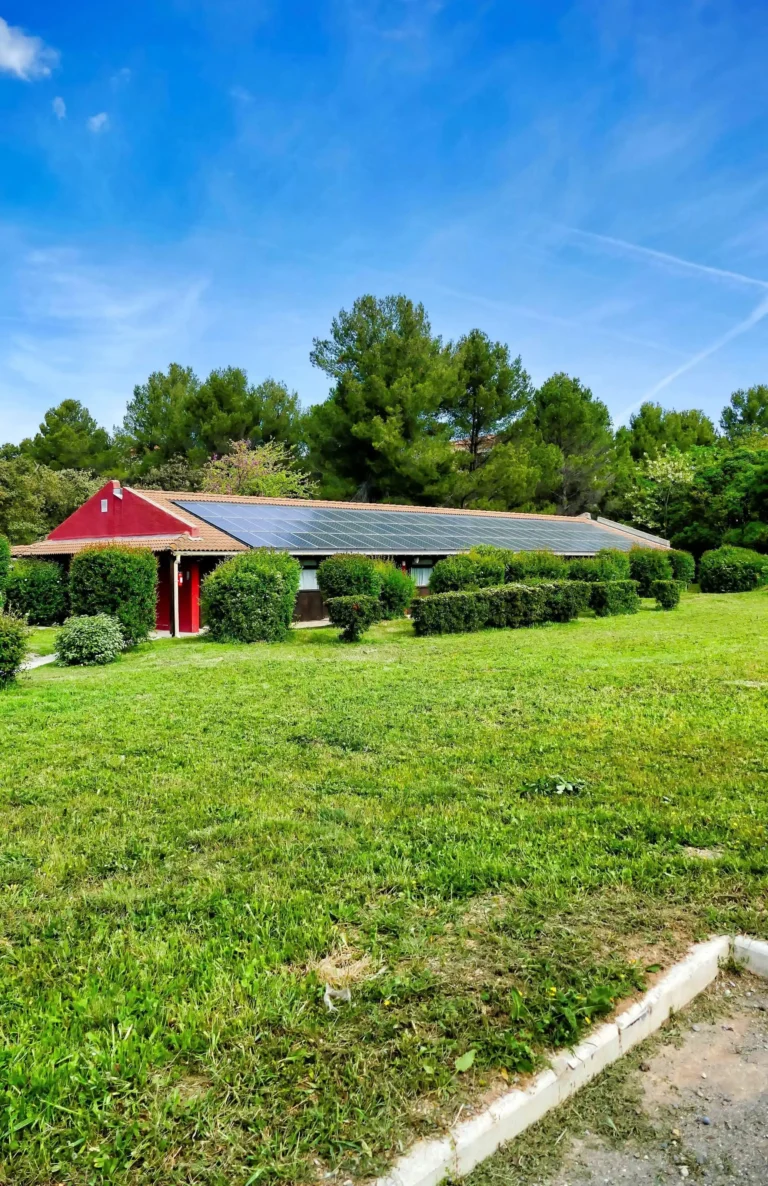
The Solar-Powered Home with Battery Backup.
It’s not a requirement, but an increasing number of homeowners are interested in battery storage as an add-on to their solar panel system. A grid-tied solar panel system, without batteries, will be deactivated in a power outage. A battery system works like a generator – except without any fossil fuel and without any noise! They will turn on automatically when the power goes out.
How much battery do you need?
A battery usually only supplies “Critical Loads” – well pump, refrigerator and/or freezer, some lights, and backup heat (that’s why it’s a good idea to have a low-electric backup unit like a pellet stove or wood stove in a mostly all-electric house – heat pumps will deplete a battery QUICKLY)
8 – Driving on Sunshine with Electric Vehicles
Driving on sunshine is the perfect complement to a home running on solar energy!
Whether you have an electric vehicle, or plan to add one in the future, it’s useful to understand driving on sunshine affects your choices around going solar.
In a solar-powered home, the vehicle plugs into the home like any other appliance. Excess solar generation during the day earns credits, that can be use to refuel your vehicle, even at night. Just 9 solar panels provide roughly enough electricity to power 12,000 miles of electric driving each year at a low, fixed cost.
9 – The 100% Solar-Powered Home (plus calculator)

Now for the good part, how many solar panels do you need to get to your 100% solar-powered dream?
Use the tool below to get a “rough order of magnitude” understanding of how much solar is needed to accomplish your 100% solar-powered home dream. Of course, it’s just a start — our team of dedicated, highly-trained solar design specialists is ready to work with you and your home building team to help you design your perfect solar home!
With over 1,000 successful integrations into new construction projects, we are eager to bring our design expertise to help you with your dream project.